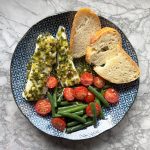
Description
Fish that has been slowly poached in scallion/onion oil, tastes even more amazing than you’d think would be possible. Spotted in NYT Cooking, this was another hot find from the summer of 2025, it works with several kinds of white fish and slow poaching fish doesn’t smell up your house so you make it whenever you want – enjoy!
Ingredients
These amounts are an outline for 2ish portions or about 115g/4oz per person (though it’s so good, you may want to make a little extra!);
kosher salt
~230 g/ 8oz white fish fillets – we’ve used cod and tilapia, but halibut, black sea bass, haddock, flounder and lemon sole are all also recommended – even-sized smaller pieces cook more evenly
6 T. good olive oil
1 bunch scallions (1 heaping cup), thinly sliced crosswise – I usually use green onions
flaky Maldon sea salt and crusty bread for serving
Instructions
Pat the fish dry, sprinkle about a 1/4 teaspoon of kosher salt over each fillet and refrigerate, uncovered, for a half hour. This will brine and air dry them a little bit.
Aim to have the rest of your dinner ready before you start cooking because the fish is best hot out of the pan. When you’re ready to cook, add the olive oil and the scallions to a small (medium/large if cooking more) cold skillet and bring to a simmer over medium heat. Cook for a good 10 minutes, until most of the scallions are dark green and some are also turning brown, then turn off the heat, but leave the skillet on the burner.
Gently and immediately add in the fish, spoon some of the hot oil over top each fillet, leave the fish to cook in the residual heat for 1 to 3 minutes, then flip over the fish with the fried scallions and leave it to finish cooking for 1 to 5 minutes. If the fillets are thicker/larger, you may need to turn the burner back on to low heat and put a lid on the skillet to help the fish along, but either way, you want the insides to no longer be translucent. The cooking time will vary depending on the number and thickness of the fillets, the amount of oil/scallions, the size of the skillet, how quickly you added the fish and how intensely your skillet retains it’s heat. Super simple to navigate, you just need to pay attention.
Serve the fish immediately! – we really loved ours with a simple salad and some toasted sourdough.